dispositif
Special economic zones (SEZ) regime
Agency for the Promotion of Investments and Exports (APIEx) (APIEx) permanent
Unofficial English translation of the French page: the French text prevails. Read the French version.
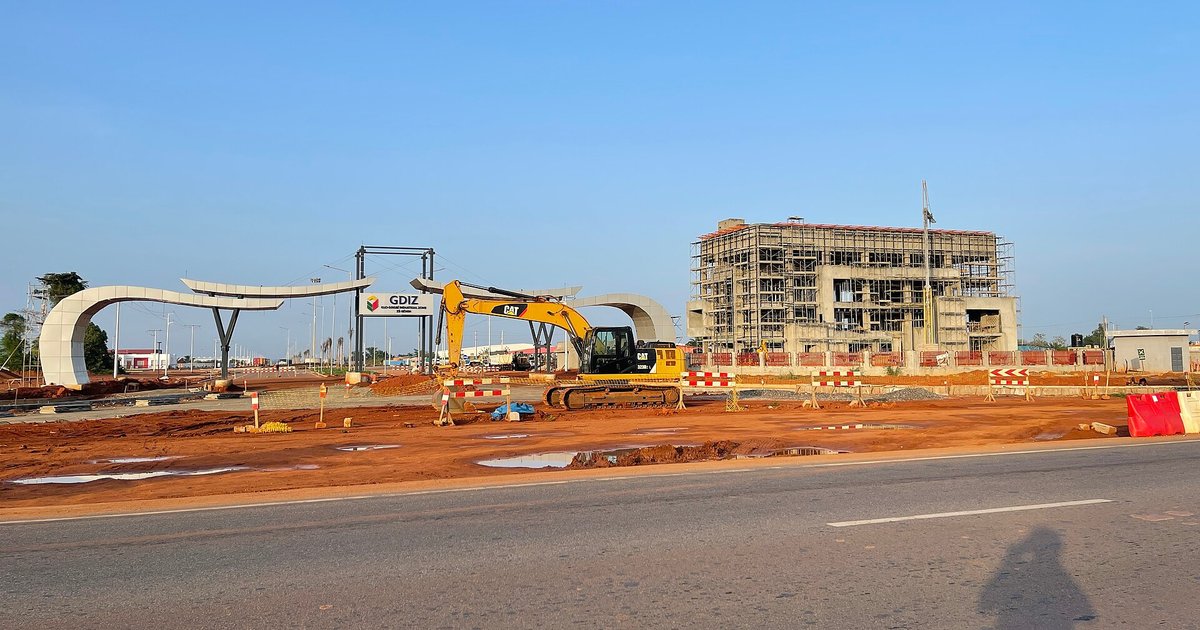
A special economic zone (SEZ) is, under article 2 of Law no. 2022-38 of 3 January 2023, an area of the national territory delimited by the State to develop an economic hub, through tax and customs benefits, set-up facilities and simplified administrative procedures granted to national and foreign investors. Each zone is created by a decree adopted in the Council of Ministers, which sets the type of companies admitted, the eligible activities and the applicable regime. The law has applied since 1 April 2023 and repeals Law no. 2017-07 of 19 June 2017.
A company that sets up a production, processing or assembly unit in a zone chooses between two regimes: the export regime (type 1) and the regime for the promotion of intra-community trade (type 2), divided into three categories, A, B and C, according to the amount invested. Setting up requires approval (agrément) from the approval committee. The benefits cover import duties and taxes on equipment, corporate income tax, the business licence tax (contribution des patentes et licences) and the employer payroll levy (versement patronal sur salaires), for 12 to 17 years of operation depending on the regime. The Agency for the Promotion of Investments and Exports (APIEx) presents the scheme on its page on special economic zones.
- Who it is for
- Companies, Beninese or foreign, incorporated as legal entities, that want to set up a production, processing or assembly unit, or infrastructure for industry or trade, in a special economic zone.
- Contact
- Agency for the Promotion of Investments and Exports (APIEx) · +229 01 52 83 66 66 · [email protected]
- Official page
- APIEx
Conditions
Permitted and prohibited activities
Article 4 of the law authorises, in an SEZ and for an approved legal entity, industrial, agri-food or agro-industrial production and assembly of major or strategic interest for the national economy, as well as logistics, warehousing and the development of infrastructure for industry or trade for the benefit of international distribution hubs or of companies located in the zone exclusively for export. Commercial or service activities that facilitate the main production activity are admitted on terms set by decree. Illegal activities are prohibited, in particular trafficking in drugs, narcotics and arms, the import and transit of industrial waste and money laundering, as is any activity contrary to Beninese legislation.
Who can be approved
The investor is a legal entity under private or public law, Beninese or not (article 22). Its project must comply with the objectives set by the decree creating the zone, and it commits to two things (article 24): making an investment aimed mainly at industrial production or processing, industrial assembly, infrastructure for industry or trade, or adding value to national resources for export; and creating at least 80% of its permanent direct jobs for nationals. A company that already benefits from another preferential investment regime is excluded. The creation decree and the specifications (cahier des charges) of each zone may spell out these conditions (article 25).
For the export regime, the law adds that the investor demonstrates that its business is intended to generate at least 80% of its turnover from exports (article 24); the APIEx page presents this regime as applying to companies that export 80% of their production. On authorisation from the Council of Ministers, the approval committee may exempt an investor from one or more of these conditions, or relax them, where its programme contributes to the government's strategic development objectives (article 26).
The two regimes, the thresholds and the durations
Article 34 distinguishes the export regime (type 1), the only one that fully exempts imported raw materials from customs duties in the operating phase, from the regime for the promotion of intra-community trade (type 2), which gives entitlement to the community certificate of origin for the goods manufactured. Type 2 has three categories according to the amount of the investment, excluding tax, in CFA francs (FCFA): category 2-A from 10 to 20 billion FCFA inclusive, category 2-B above 20 and below 50 billion FCFA, category 2-C from 50 billion FCFA upwards. The APIEx page gives the same brackets.
Operating exemptions last 15 years for type 1 and for category 2-B, 12 years for category 2-A and 17 years for category 2-C (articles 41, 45, 46 and 47). The general presentation on the APIEx page speaks of an incentive “over a period of up to 15 years”; its pages on each regime state 15, 12, 15 and 17 years, as the law does.
Sales between the zone and the rest of the country
A sale by a type 1 company to the national customs territory or to a type 2 company is treated as an import: the buyer pays, on the raw materials used for production, customs duties and taxes and ordinary-law value-added tax (VAT) (article 39). The same article subjects approved investors, during the first 12 years of operation, to an annual tax levy of 3% on the turnover generated in the national customs territory. Conversely, sales made from the national territory, or by a type 2 company, to a type 1 company are treated as exports, exempt from customs duties and taxes and from VAT; the mandatory export levies and fees nevertheless apply, in particular to raw materials sold to the zone (article 40).
Benefits of the export regime (type 1)
During the period set for carrying out the investments, article 41 fully exempts from import duties and taxes the equipment, tools and utility vehicles intended exclusively for production, as well as spare parts specific to the imported equipment, up to 15% of the cost, insurance and freight (CIF) value of the equipment. Still due are the road tax (taxe de voirie), the statistics tax, the customs stamp, the community levy, the community solidarity levy and the solidarity levy. The renewal or modernisation of equipment during operation receives the same exemption, on a decision of the approval committee, to which the matter is referred by the development and management company (article 42).
During the first 15 years of operation, the company is exempt from customs duties on raw materials, corporate income tax, the advance payment on profit-based tax, the flat-rate minimum tax, the business licence tax, registration duties on a capital increase and the employer payroll levy. After that, the exemption from customs duties on raw materials remains, and the company moves to the ordinary-law regime, with a reduced rate of 15% for corporate income tax. Disposals of assets, transfers and contributions between type 1 companies of a zone are exempt from transfer and registration duties and from capital gains tax, and exports of goods produced in the zone are not subject to any taxation (articles 43 and 44).
Benefits of the intra-community trade regime (type 2)
In all three categories, the period for carrying out the investments gives the same exemption from import duties and taxes as under type 1, with the same exceptions, on equipment, tools and utility vehicles intended exclusively for production and on spare parts specific to the imported equipment (articles 45, 46 and 47). For categories A and B, these parts are exempt up to 15% of the CIF value of the equipment; for category C, article 47 does not mention this limit, which the APIEx page includes. The renewal or modernisation of equipment follows the same rule as under type 1 (article 48).
In operation, category 2-A is exempt for 12 years from corporate income tax, the advance payment on profit-based tax, the flat-rate minimum tax and the business licence tax, and benefits from a 50% reduction in the employer payroll levy; after that, corporate income tax falls under ordinary law, at 15%. Category 2-B receives the same exemptions for 15 years, with an 80% reduction in the employer payroll levy, then returns to ordinary law for corporate income tax. Category 2-C receives the same exemptions for 17 years, together with exemption from the employer payroll levy and from registration duties on a capital increase, then returns to ordinary law for corporate income tax. In all three categories, exports outside the national customs territory are not subject to any taxation, and disposals, transfers and contributions between type 2 companies of a zone are exempt from transfer and registration duties and from capital gains tax (article 49).
Foreign exchange, employment and residence of foreigners
Subject to foreign exchange regulations, the persons admitted may repatriate the profits of their activities in the zone, carry out foreign exchange operations, invest, borrow, lend and distribute profits (article 37). They may freely transfer, through approved banks or financial institutions, distributions of profits and dividends, royalties, management and technical assistance fees, bank interest and payments linked to technology transfers or to purchases of goods and services abroad (article 38). A one-stop shop, set up in each zone and run by the administrative authority, a legal entity under public law that represents the State in relation to the zones, brings together the administrations involved in the creation, operation and control of companies (articles 6 and 7).
Employees are hired under freely negotiated employment contracts; the employer complies with the legislation on social protection and must take out health insurance for all its employees (article 50). Admitted investors benefit from a simplified procedure for entry visas and resident cards (article 51). Unless holding a valid visa, a foreign employee obtains a resident card before taking up the post; it is issued for five years, renewable, on payment of the corresponding fees but without a repatriation deposit (caution de rapatriement) (article 52).
Approval: application, decision and deadlines
Admission to a zone is subject to approval issued by the approval committee (article 23). The development and management company of the zone, designated by decree, receives investors, helps them prepare their application and draws up the preliminary review report on the basis of which the committee issues the approval (articles 10, 12 and 20). The content of the application file is set by a decree adopted in the Council of Ministers. The development and management company has 30 working days from the filing of the application file to inform the investor of the committee's decision, which is notified to the investor with a copy to the administrative authority (article 27).
The approval sets the deadlines for carrying out the project and the specific conditions of the investment. The investor may submit a reasoned request for an extension to the development and management company; the committee grants it in whole or in part after obtaining the company's opinion. If the investment is not made within the prescribed deadline, the committee withdraws the approval within 30 days of the matter being referred to it (article 28). Any substantial change to the investment programme must be authorised in advance by the committee (article 33).
The company's obligations and withdrawal of approval
The approved company informs the development and management company of the level of completion of its programme at the end of each half-year, submits to it at the end of each calendar year a report on its programme and activity, and files its company accounts at the end of each financial year with the administrative authority, with an immediate copy to the development and management company (article 33). Entries and exits of goods, disposals between companies of the zone and destruction or loss of goods are declared monthly to the administrative authority, on a single form (article 36).
Approval may be withdrawn for violation of the law or of the zone's specifications, or for serious violation of other legal provisions (article 29). After an investigation, the development and management company serves the investor with a formal notice (mise en demeure); if it has no effect within 30 days of receipt, it may ask the committee for withdrawal (article 30). An appeal is brought before the competent courts within 60 days of notification; it has no suspensive effect, the court rules within three months at the latest, and conciliation, mediation and arbitration remain possible (article 31). Once the withdrawal is confirmed, the investor pays the duties, taxes and charges due within 30 days of being notified that they are to be collected, loses all exemptions, immediately ceases its activity and leaves the zone within six months at most (article 32).
Companies already committed at Glo-Djigbé
The APIEx page presents the Glo-Djigbé Industrial Zone (GDIZ), located 45 km from Cotonou and dedicated to the local processing of agricultural products such as cotton, cashew nuts, pineapple, shea nuts and soya. Article 53 of the law, which writes “Glo-Djibé”, exempts from the minimum investment amounts the companies that have obtained provisional approval or applied to set up in this zone; their formalities and procedures already under way remain valid.
These companies keep their previous legal benefits for 15 years from the entry into force of the law, then move by operation of law to the provisions of the law applicable in the operating phase. Before that date, they may opt for the benefits of the law if they consider them more favourable: the request is sent to the development and management company, which refers it to the approval committee, and the committee records by special deliberation the date from which the new benefits replace the old ones.
Related guides
 Sell
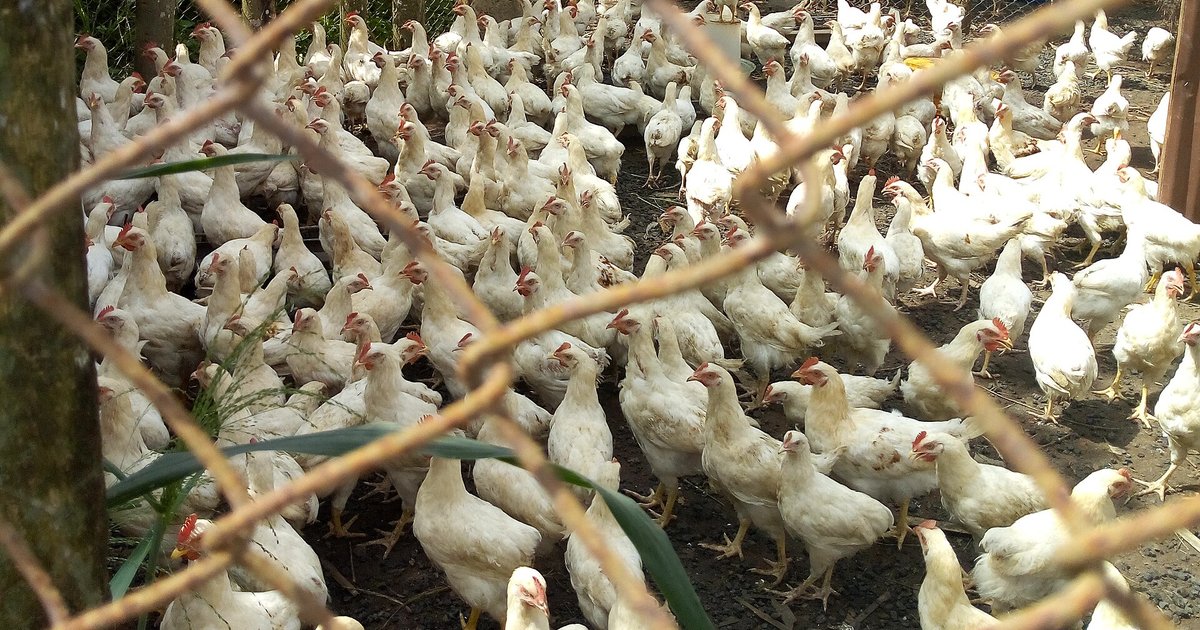
How to start a business in Benin’s poultry value chain?
In 2024, Benin imported 90,100 tonnes of poultry meat and edible offal, against 132,900 in 2023; local production covers about 8% of demand, according to APIEx.
7 steps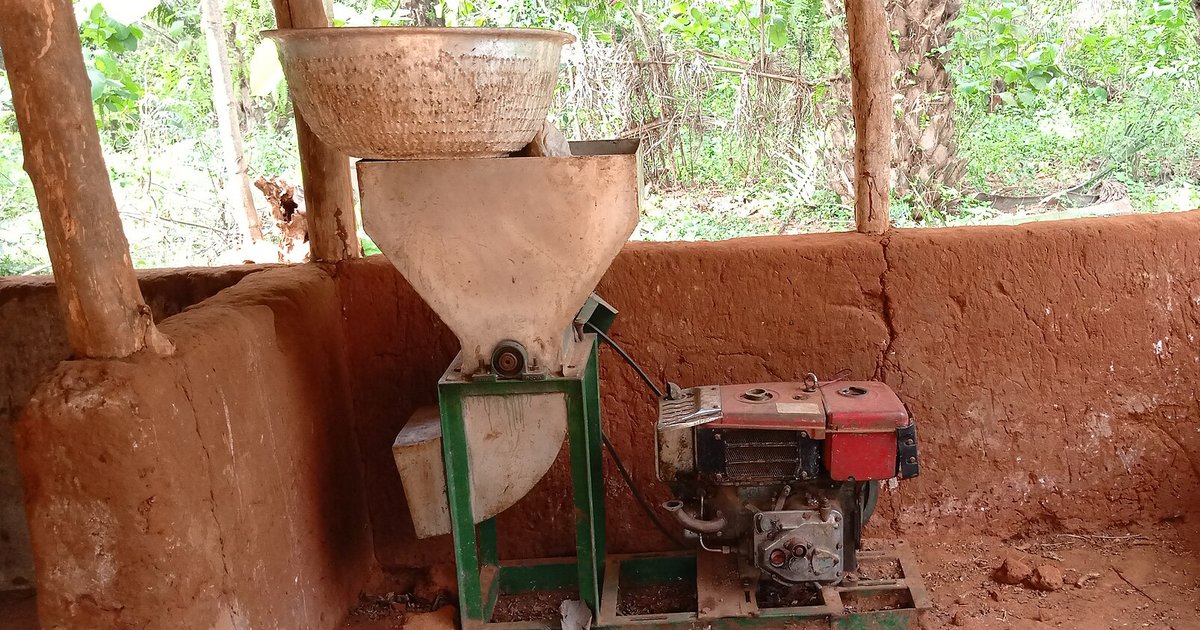 Sell
How to get into the cassava value chain in Benin?
Neighbouring Burkina Faso, Africa’s leading market for cassava starch, imported 35,116 tonnes in 2023; Côte d’Ivoire is its main supplier.
8 steps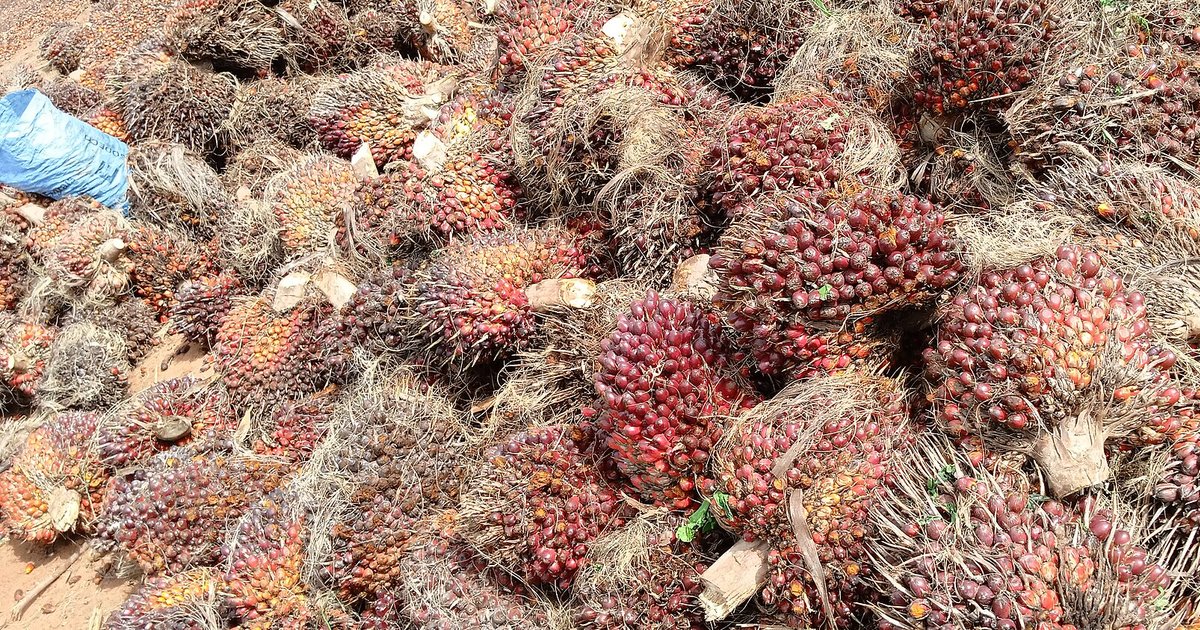 Sell
How to start in Benin’s oil palm value chain?
According to APIEx, Benin imported 159,204 tonnes of refined palm oil in 2023, compared with 2,278 tonnes of crude palm oil; it buys an average of 273 tonnes of palm nuts and kernels a year over 2021-2023.
8 steps