Sell
How to get into the cassava value chain in Benin?
Neighbouring Burkina Faso, Africa’s leading market for cassava starch, imported 35,116 tonnes in 2023; Côte d’Ivoire is its main supplier.
Unofficial English translation of the French page: the French text prevails. Read the French version.
- Steps
- 8
Who it is for and why
Benin produced 4,449,430 tonnes of cassava roots in 2023, up from 4,161,660 tonnes in 2020, according to the study by the Agency for the Promotion of Investments and Exports (APIEx) on cassava starch. The investment project it cites is an integrated unit that processes the root into starch.
This guide is for anyone looking for an activity to start, even without having created a business yet. The study concerns two profiles in particular: the project promoter who wants to produce starch to sell in Benin or abroad, and the manufacturer already based in Benin who uses cassava starch in production and is looking for suppliers. The importing countries matter to the first, the exporting countries to the second.
What you need
- A company: approval under the Investment Code and the special economic zone regime are both intended for legal entities (see setting up your company online).
- An investment of at least 50,000,000 FCFA excluding tax to fall under the Investment Code; special economic zones come under a separate law.
- A location: Glo-Djigbé, Sèmè Kpodji or Gakpé, as cited in the study.
- An identified market: country, import volumes, distance from Benin, currency and customs duties.
- A certificate of origin to export, issued by the Foreign Trade Directorate (see importing or exporting in Benin).
The steps
Size up the root, the starch and its uses
Cassava root carries code 071410 of the Harmonized Commodity Description and Coding System (HS), and starch carries code 11081400. According to the APIEx study, Benin produced 4,161,660 tonnes of roots in 2020, 4,218,992 tonnes in 2021, 4,350,054 tonnes in 2022 and 4,449,430 tonnes in 2023. The agency’s cassava fact sheet adds 4,477,463 tonnes for 2024 and a yield of 8 tonnes per hectare.
Starch is used by four groups of industries: food processing, paper, glues and adhesives, and pharmaceuticals and cosmetics. The fact sheet also cites other products made from the root: alcohol, attiéké, gari, lafu and tapioca.
Among the organisations in the value chain, the fact sheet cites the national federation of cassava processors and the National Chamber of Agriculture of Benin. For industrial starch production, the study lists no player in Benin.
- Where: https://investbenin.bj/assets/upload/others/41dcc955-b20a-46a8-84d5-446ec58f86f2.pdf
Choose your position: produce the starch or source it
The project promoter who sets up in Benin to produce cassava starch is aiming at export: the study presents the importing countries and the competing countries that supply them. The investment project the study cites is an integrated unit that processes cassava root into starch; the fact sheet adds investment in cassava production.
The manufacturer already based in Benin follows a different logic. According to the study, a processing unit located in Benin could cover its starch needs from local producers and its additional needs from the main foreign suppliers.
- Where: https://investbenin.bj/assets/upload/others/41dcc955-b20a-46a8-84d5-446ec58f86f2.pdf
Choose the site and the regime: special economic zone or Investment Code
The study cites three sites: the Glo-Djigbé Industrial Zone (GDIZ), in the Atlantique department, and Sèmè Kpodji, in the Ouémé department, which are special economic zones (SEZs), as well as Gakpé, an industrial zone in Atlantique.
In an SEZ, the company chooses between two regimes. The export regime requires the investor to demonstrate that it intends to make at least 80% of its turnover from exports. The intra-community trade promotion regime starts at 10 billion FCFA of investment excluding tax and gives entitlement to the community certificate of origin; the study states that industries approved under this regime are not authorised to export outside the Economic Community of West African States (ECOWAS). Conditions and benefits are set out in the factsheet on the special economic zones regime.
Outside the SEZ regime, the Investment Code opens three basic regimes to projects of at least 50,000,000 FCFA excluding tax: regime A from 50 million to 1 billion FCFA, regime B above 1 billion and below 50 billion, and regime C from 50 billion. Approval is requested from APIEx, which has 20 working days from the filing of the application to give its technical decision. During set-up, the approved company imports its production equipment free of import duties and taxes, apart from a few levies; the procedure is detailed in the factsheet on approval under the Investment Code.
- Where: Agency for the Promotion of Investments and Exports (APIEx)
Target ECOWAS markets first
The study presents Benin as the first gateway to ECOWAS thanks to its neighbour, Nigeria. Over 2021-2023, it ranks six countries of ECOWAS before 2025 among the importers of cassava starch: Burkina Faso, with 28,835 tonnes a year on average, Ghana with 1,158 tonnes, Senegal with 940 tonnes, Nigeria with 87 tonnes, Mali with 56 tonnes and Gambia with 6 tonnes. For each, it notes a customs duty exemption on products originating in the sub-region.
Burkina Faso is the leading African outlet, and it borders Benin. A landlocked country with no seaport, it had 23.1 million inhabitants in 2023, uses the CFA franc and lies 1,038 km from Benin by land. Its imports rose from 8,118 tonnes in 2020 to 18,492 tonnes in 2021, 32,897 tonnes in 2022 and 35,116 tonnes in 2023. In the list of its suppliers, Côte d’Ivoire accounts for 28,778 tonnes a year, Ghana for 13 tonnes and Benin for 10 tonnes.
The other markets in the zone are smaller or further away. Ghana, 789 km away by land, uses the cedi; Senegal, 2,886 km away, and Mali, 2,176 km away, use the CFA franc like Burkina Faso. Nigeria, 119 km away by land and home to 227.9 million people, imports only 87 tonnes a year, bought mainly from China (34 tonnes) and Thailand (29 tonnes); its currency is the naira.
- Where: https://investbenin.bj/assets/upload/others/41dcc955-b20a-46a8-84d5-446ec58f86f2.pdf
Look at more distant African and world markets
Outside ECOWAS, on average over 2021-2023, South Africa imports 12,315 tonnes a year, Algeria 2,700 tonnes, Mauritius 435, Mozambique 407, Madagascar 336, Zimbabwe 316 and Kenya 139. For Africa as a whole, the study puts imports at 26,844 tonnes in 2020 and 61,364 tonnes in 2023. By sea, the markets on this list that have a port lie between 2,557 nautical miles (South Africa) and 5,073 nautical miles (Kenya) from Benin; one nautical mile equals 1.852 km.
Worldwide, China is the leading consumer of cassava starch from 2020 to 2023: it imported 3,703,581 tonnes a year on average over 2021-2023, and its consumption rose by 9% on average, with a peak of 23.7% in 2022 compared with 2021. Behind it come Taiwan (325,286 tonnes), Malaysia (193,833), the Philippines (132,553), Japan (127,421), the United States (122,726), Indonesia (121,604), Singapore (66,596), Viet Nam (44,062) and Laos (34,877). World imports were 4.0 million tonnes in 2020, 4.7 in 2021, 6.0 in 2022 and 4.7 in 2023.
By sea, Singapore is 8,175 nautical miles from Benin, the United States 8,805, China 10,263 and Japan 10,927. Laos, a landlocked country, has no seaport.
- Where: https://investbenin.bj/assets/upload/others/41dcc955-b20a-46a8-84d5-446ec58f86f2.pdf
Map the competing suppliers
For ECOWAS importers, the study lists six main suppliers, with the average quantities exported each year over 2021-2023: Côte d’Ivoire (28,778 tonnes), Viet Nam (655), Thailand (529), Nigeria (403), Togo (381) and China (130). For Côte d’Ivoire, Nigeria and Togo, it notes the customs duty exemption on products originating in the sub-region; for Viet Nam, Thailand and China, an advantage linked to the World Trade Organization (WTO). As suppliers to the ten leading African importers, Côte d’Ivoire (28,778 tonnes a year), Thailand (10,276), Viet Nam (3,696) and Brazil (1,730) come first.
On the world market, supply is mainly Asian. On average over 2021-2023, Thailand exported 3,289,767 tonnes of starch to the world’s ten leading importers, Viet Nam 1,163,965 tonnes, Laos 188,884 tonnes, Indonesia 155,125 tonnes and Cambodia 40,736 tonnes. To China alone, Thailand supplied 2,298,919 tonnes a year and Viet Nam 1,089,899 tonnes. Thailand is 8,983 nautical miles from Benin and Viet Nam 8,725. In the Americas, Brazil exports 9,578 tonnes a year, 3,344 nautical miles from Benin, Paraguay 8,114 tonnes and Nicaragua 5,711 tonnes.
- Where: https://investbenin.bj/assets/upload/others/41dcc955-b20a-46a8-84d5-446ec58f86f2.pdf
Organise transport and export documents
Burkina Faso and Mali, which have no seaport, are reached by road, at 1,038 km and 2,176 km. Togo is 156 km away by land and 70 nautical miles by sea, Nigeria 119 km and 62 nautical miles, and Côte d’Ivoire 867 km and 398 nautical miles. Twelve shipping lines and eighteen airlines operating in Benin appear in the study’s directory, with their contact details.
To export, the certificate of origin attests that the product originates in Benin. According to the national public services portal, it is issued by the Foreign Trade Directorate (DCE); the procedure is detailed in the guide on importing or exporting in Benin.
- Where: Foreign Trade Directorate (DCE), Cotonou, Cadjèhoun
Put the financing together
The National Agricultural Development Fund (FNDA) supports those who produce, process or market agricultural products. It guarantees up to 50% of loans from banks and microfinance institutions, can subsidise their interest rates and awards grants to projects, provided the activity belongs to a priority value chain promoted by the territorial agricultural development agencies (ATDA). Its windows are detailed in the guide on how to get agricultural financing from the FNDA.
Approval under the Investment Code exempts regimes A, B and C from corporate income tax for an operating period of 5 to 17 years depending on the regime and the location.
- Where: https://entreprendre.bj/en/guides/financer/fnda-financement-agricole-benin/
The pitfalls
- Exporting outside ECOWAS from an SEZ under the intra-community regime. The study states that these industries are not authorised to do so.
- Confusing the root and the starch. National production concerns the root (HS code 071410), while the markets’ imports concern the starch (HS code 11081400).
- Forgetting that Côte d’Ivoire already supplies Burkina Faso. The country imports 28,835 tonnes a year, of which 28,778 tonnes come from Côte d’Ivoire.
- Taking an average for a guaranteed volume. The quantities are averages over 2021-2023, drawn partly from mirror data from the Trade Map platform (the declarations of partner countries), as of October 2025.
- Combining two regimes. The Investment Code does not cover investments that fall under the SEZ regime, and a company that already benefits from another privileged regime is excluded from SEZs.
Frequently asked questions
Is there already industrial cassava starch production in Benin?
The APIEx study identifies no player in industrial cassava starch production in Benin. The investment project it cites is an integrated unit that processes the root into starch.
What is Africa’s leading market for cassava starch?
Burkina Faso, Benin’s neighbour: 28,835 tonnes imported a year on average over 2021-2023 and 35,116 tonnes in 2023. Côte d’Ivoire supplies it with 28,778 tonnes a year.
Can a company based in a special economic zone sell outside ECOWAS?
Not under the intra-community trade promotion regime: the study states that industries approved under this regime are not authorised to export outside ECOWAS. The export regime requires the investor to demonstrate that it intends to make at least 80% of its turnover from exports.
What is cassava starch used for?
The study cites four groups of industries: food processing, paper, glues and adhesives, and pharmaceuticals and cosmetics.
Who supplies the world’s largest importers of cassava starch?
Thailand (3,289,767 tonnes exported a year on average over 2021-2023 to the ten leading importers) and Viet Nam (1,163,965 tonnes) come first. The leading importer is China, with 3,703,581 tonnes a year.
Related incentive schemes
 APIEx
Approval under Benin's Investment Code
Companies governed by Beninese law, national or foreign, that invest at least 50,000,000 FCFA excluding tax, and promoters of tourism, cultural, sports, health, education or warehousing infrastructure projects.
dispositifpermanent FNDA
National Agricultural Development Fund
Farmers, agricultural entrepreneurs and agricultural businesses, and farmers’ professional organisations (OPA), that produce, process or market agricultural, animal or fisheries products.
financingpermanent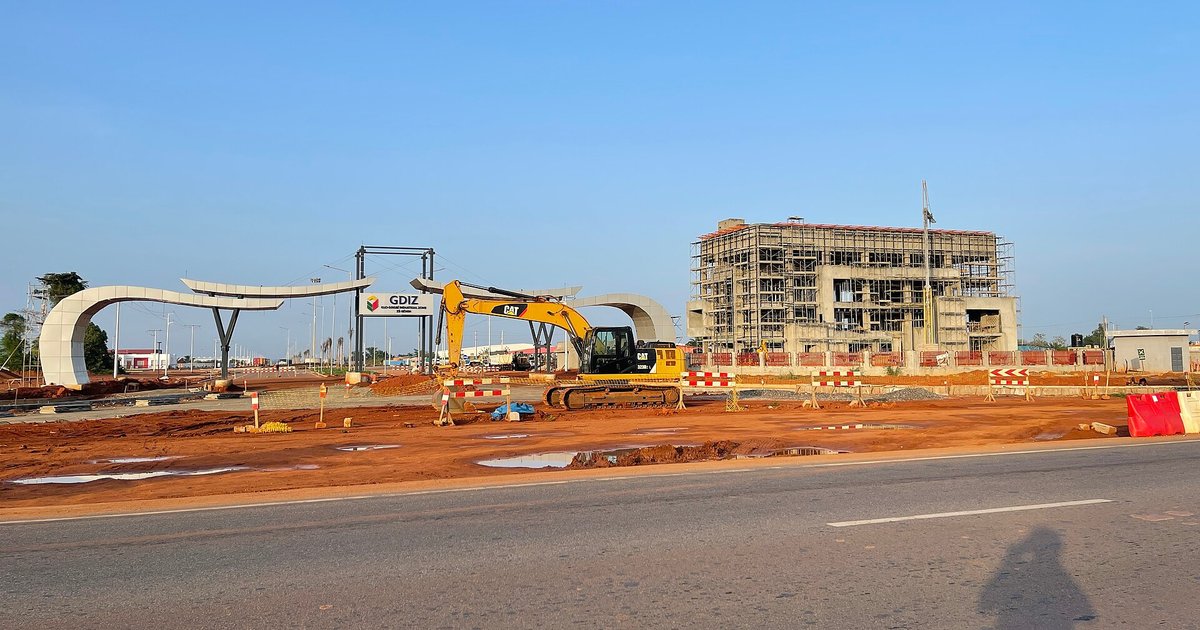 APIEx
Special economic zones (SEZ) regime
Companies, Beninese or foreign, incorporated as legal entities, that want to set up a production, processing or assembly unit, or infrastructure for industry or trade, in a special economic zone.
dispositifpermanent