dispositif
Approval under Benin's Investment Code
Agency for the Promotion of Investments and Exports (APIEx) (APIEx) permanent
Unofficial English translation of the French page: the French text prevails. Read the French version.
Approval (agrément) under the Investment Code is the authorisation that a company must obtain to carry out an investment in Benin with a favourable customs and tax regime. Provided for by Law no. 2020-02 of 20 March 2020 on the Investment Code, it opens three basic regimes, A, B and C, to projects of at least 50,000,000 FCFA excluding tax, and two special regimes. During the set-up period, the approved company imports its production equipment free of import duties and taxes, apart from a few levies; under Regimes A, B and C, it is then exempt from corporate income tax and other taxes during an operating period of 5 to 17 years depending on the regime and the zone where it is located.
The application is filed with the Agency for the Promotion of Investments and Exports (APIEx), the one-stop shop for approval formalities. The law gives it 20 working days from the filing of the application to issue its technical decision. If the project is judged acceptable, the agency issues a technical acceptability certificate (certificat d'acceptabilité technique), then the Council of Ministers decides on the approval and a joint ministerial order records it.
In return, the approved company follows the approved investment plan, submits to inspections and trains its local staff. A serious breach can cost it the regime and oblige it to repay the benefits it obtained.
- Who it is for
- Companies governed by Beninese law, national or foreign, that invest at least 50,000,000 FCFA excluding tax, and promoters of tourism, cultural, sports, health, education or warehousing infrastructure projects.
- Observed lead time
- Announced: 20 working days from filing for APIEx's technical decision (Law no. 2020-02, art. 32); 20 days of review according to the APIEx page
- Contact
- Agency for the Promotion of Investments and Exports (APIEx) · +229 01 52 83 66 66 · [email protected]
- Official page
- APIEx
Conditions
Eligible projects and the three basic regimes
The Code applies to investments made in Benin by a legal entity, and its basic regimes are aimed at national and foreign companies governed by Beninese law. The amount of the investments excluding tax determines the regime: Regime A applies from 50,000,000 FCFA up to and including 1 billion FCFA, Regime B above 1 billion FCFA and below 50 billion FCFA, and Regime C from 50 billion FCFA upwards (art. 4).
The Code does not cover public-private partnership investments, those that fall under the special economic zones regime, or those governed by specific laws, such as mining and oil. It also excludes purchase for resale in unaltered form and activities that involve neither working nor processing within the meaning of the customs nomenclature, such as repackaging, cutting or packaging of finished or semi-finished products (art. 3). A company already established that expands its activity receives the benefits provided for set-up only if the expansion does not concern an activity that is already approved (art. 5).
At set-up: import duties and taxes
While the investment programme is being carried out, Regimes A, B and C fully exempt the equipment, tools and utility vehicles intended exclusively for production under the approved programme, as well as spare parts, from import duties and taxes. Still due are the road tax (taxe de voirie), the statistics tax, the customs stamp, the community levy (PC), the community solidarity levy (PCS) and the solidarity levy (PS). Under Regimes A and B, the exempt spare parts are those specific to the imported equipment, up to 15% of the CIF value (cost, insurance and freight) of the equipment; under Regime C, the exemption covers the spare parts of the approved project (art. 36 to 38).
Certain goods remain outside the duty exemption: construction and finishing materials, office equipment, household appliances, private passenger cars, air conditioning other than central air conditioning and, with some exceptions, petroleum products. This exclusion does not apply to tourism or hotel projects or to university infrastructure for vocational training, applied research and innovation, for the goods essential to their operation; the approval act then sets the exempt quantities (art. 46).
In operation: taxes
During the operating period, Regimes A, B and C exempt the company from corporate income tax (IS), the advance payment on profit-based tax (AIB), the flat-rate minimum tax and the business licence tax (contribution des patentes et licences). They differ on the employer payroll levy (versement patronal sur salaires), the tax the employer owes on the salaries it pays, at a rate of 4% under the 2026 General Tax Code: a 50% reduction under Regime A, 80% under Regime B, full exemption under Regime C. Regime C adds exemption from registration duties on a capital increase (art. 36 to 38). Transactions that do not fall under the activities listed in the approval certificate remain subject to ordinary law (art. 47).
How long the benefits last
The approval covers a set-up period, during which the investment programme must be carried out, then an operating period; the approval certificate sets the duration (art. 26). At the end of set-up, the promoter submits the detailed list of the investments made to the Investment Control Commission, which issues a certificate of completion of set-up after inspection (art. 27). The approved operating period runs from that certificate; if the Commission does not respond within 15 working days after notification of the completion of the programme, operation is provisionally authorised (art. 28).
The operating period depends on the regime and the zone where the company is located (art. 29): 5 years for Regime A throughout the territory; for Regime B, 8 years in zone 1, 10 years in zone 2 and 12 years in zone 3; for Regime C, 15, 16 and 17 years in the same zones. The three zones are defined by a decree adopted in the Council of Ministers (art. 30).
The approval can be neither renewed nor extended: when it expires, the company falls under ordinary law (art. 49). While it lasts, no later law or regulation can remove or restrict the regime, except as a penalty (art. 50), and the company may ask to benefit from any more favourable tax or customs provision adopted afterwards (art. 51).
The two special regimes
The sectoral incentive regime targets sectors or activities judged strategic, set by a decree adopted in the Council of Ministers. An investor eligible for Regime A who invests in one of these sectors can receive the benefits of Regime B, and an investor eligible for Regime B, those of Regime C (art. 4 and 39).
The specific investments regime targets infrastructure and equipment for tourism, culture, sport, health and education, as well as certain infrastructure for industry and trade intended in particular for the storage of gas, hydrocarbons or chemical products (art. 4). It exempts all approved investments from import duties and taxes, with the same exceptions as under Regimes A, B and C; during operation, the company falls under ordinary law (art. 40).
Filing the application with APIEx
According to the APIEx page on approval, the procedure has four steps: submission of the file to the agency, in one paper copy and in digital form, issue of the admissibility certificate, review of the file, and issue of the technical acceptability certificate. The law refers to an admissibility attestation (attestation de recevabilité), issued to record the filing of a complete file (art. 31). The APIEx page states 20 days for the review of the file, and article 32 of the law states 20 working days from filing, with a reasoned written decision.
The file follows the “Plan de présentation d'une demande d'agrément” (application presentation plan) and the “Liste des pièces à fournir” (list of documents to provide), which can be downloaded from the same page. It is common to all regimes; Regimes A, B and C additionally require a forecast operating account, the calculation of the project's internal rate of return and a commitment to submit to inspections by the administration. The application fees announced by APIEx are 200,000 FCFA for Regime A, 400,000 FCFA for Regime B, 600,000 FCFA for Regime C and 100,000 FCFA for the specific investments regime.
The decision and recourse in case of delay
The final approval decision is taken in the Council of Ministers, then recorded by a joint ministerial order; an application without a technical acceptability certificate is not put before it (art. 32). The certificate and the order set the purpose of the project, its location, the deadline for carrying out the investments, the operating period, the activities covered, the nature and quantity of the exempt goods, and the company's commitments on investment, production, jobs and training (art. 34).
If the agency exceeds the deadline or commits another established failing in processing the application, the investor refers the matter to the Investment Control Commission. The Commission has 7 working days to call the agency to account and have it give a reasoned decision within that period (art. 33).
What the approved company must comply with
The company strictly follows the approved investment and activity plan, any substantial change having to be authorised in advance, and submits to administrative inspections (art. 24). It complies with laws and regulations, with national technical, social, health and environmental standards or, failing those, international ones, and with quality management standards (art. 20 and 22). It contributes to the qualification of its local staff through continuing training and technology transfer (art. 21 and 23), refrains from any corruption and does not invest funds of illicit origin (art. 25). If it also carries out ordinary-law activities, the approved activities have separate accounts (art. 6). The benefit of the regime is not transferable (art. 48), and the authorised sale of an exempt asset entails payment of the duties from which it had been exempt (art. 47).
Diversion of a good imported under a preferential regime is a serious breach and a tax and customs offence (art. 41). Failure to comply with the obligations in articles 20 to 25 exposes the company to a fine set by decree (art. 42). In case of serious violation, repeat offence, failure to carry out the programme, established after the set-up period, or failure to comply with the approval obligations, the Council of Ministers may withdraw the regime; the company then repays the State the value of the benefits obtained (art. 43 and 44). Corruption automatically entails forfeiture of the benefits (art. 25).
Documents required
- Copy of the registered articles of association (statuts)
- Copy of the registration in the Trade and Personal Property Credit Register (RCCM)
- Copy of the company's registration with the National Social Security Fund (CNSS)
- Copy of the environmental compliance certificate (certificat de conformité environnementale, CCE)
- Administrative authorisation to operate or practise, for regulated activities or professions
- Promoter's commitment to comply with the requirements of the Investment Code
- Summary presentation of the project
- Exhaustive inventory of equipment, capital goods and spare parts (template provided by APIEx)
- Financing plan
- Regimes A, B and C only: forecast operating account
- Regimes A, B and C only: calculation sheet for the project's internal rate of return (Excel file)
- Regimes A, B and C only: commitment to submit to inspections by the administration
- Any other document considered necessary for the analysis of the file
Related guides
 Sell
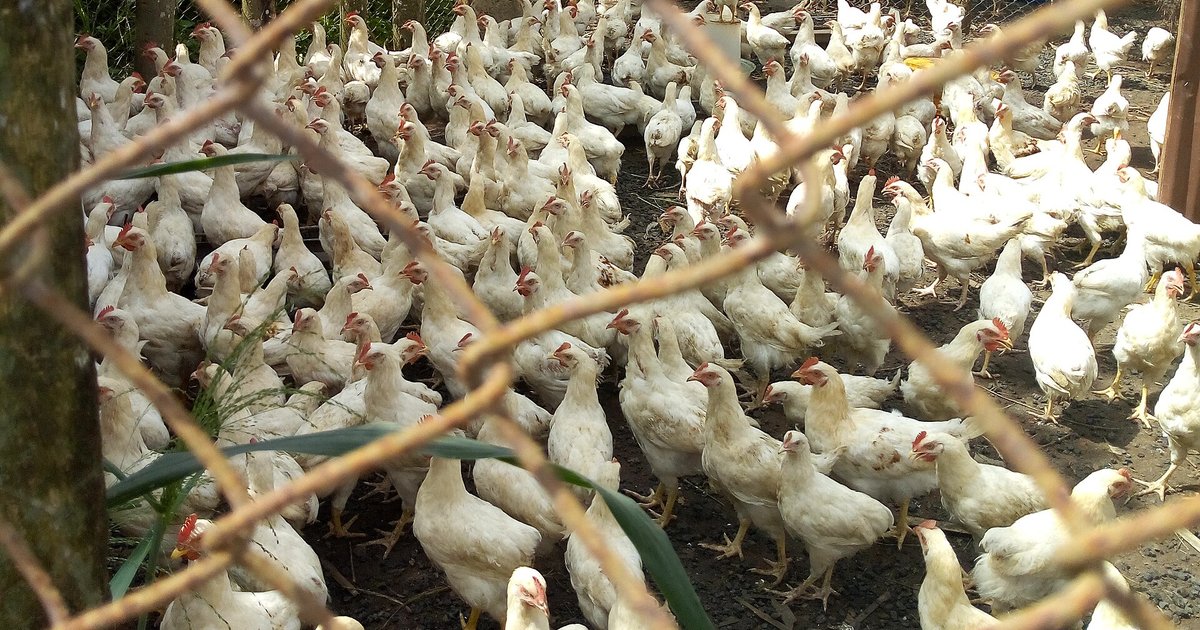
How to start a business in Benin’s poultry value chain?
In 2024, Benin imported 90,100 tonnes of poultry meat and edible offal, against 132,900 in 2023; local production covers about 8% of demand, according to APIEx.
7 steps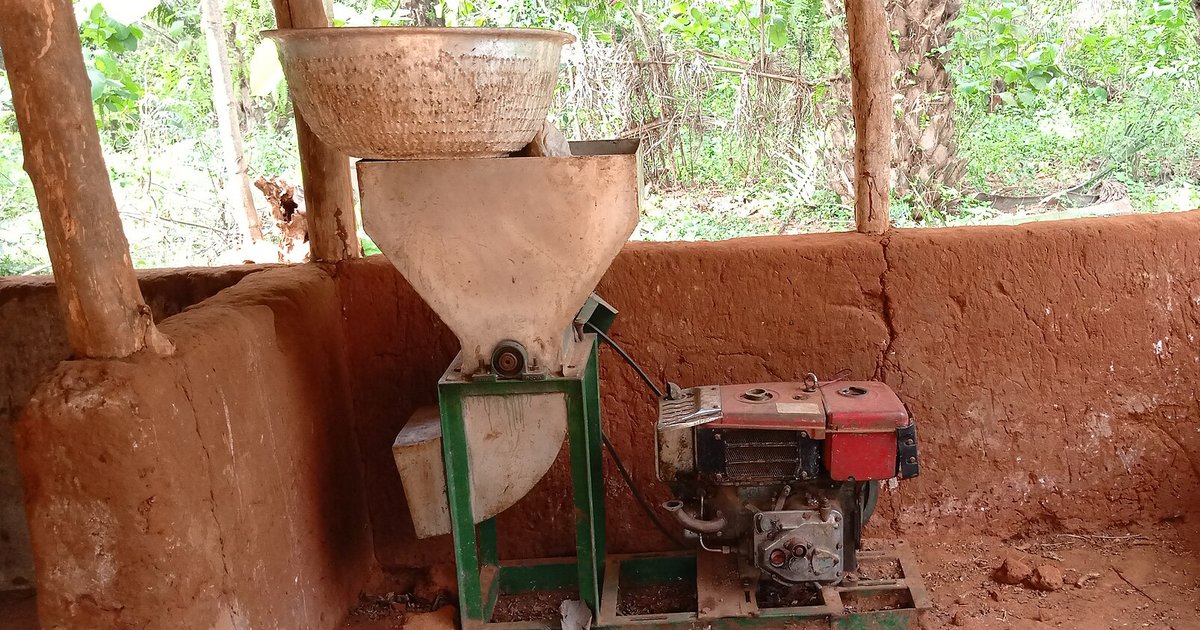 Sell
How to get into the cassava value chain in Benin?
Neighbouring Burkina Faso, Africa’s leading market for cassava starch, imported 35,116 tonnes in 2023; Côte d’Ivoire is its main supplier.
8 steps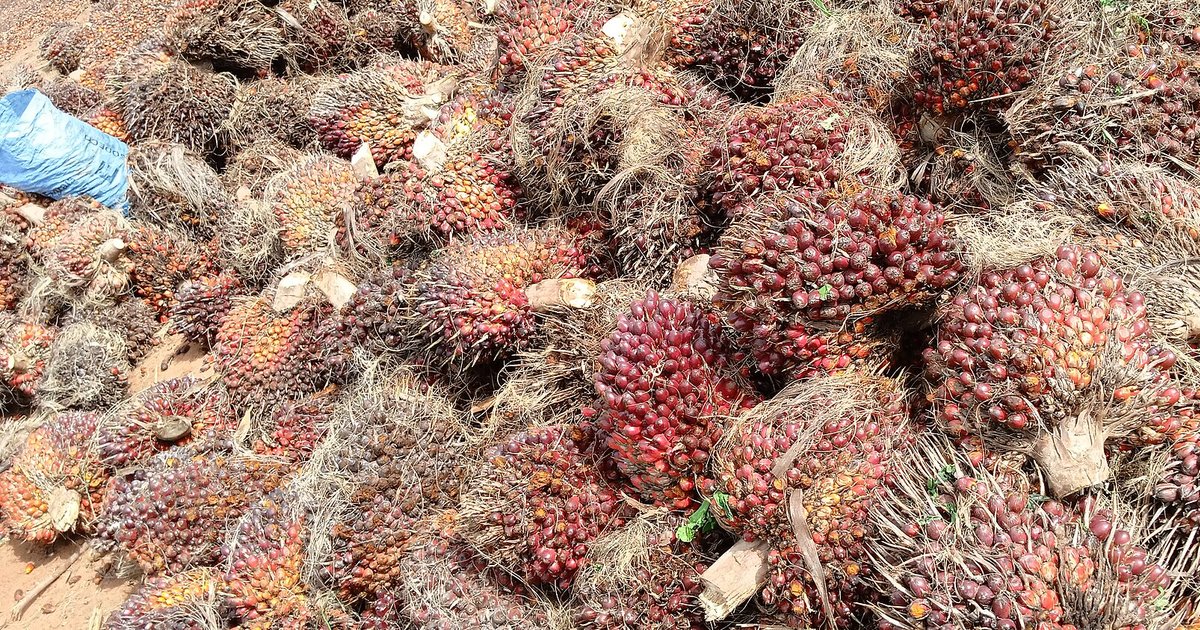 Sell
How to start in Benin’s oil palm value chain?
According to APIEx, Benin imported 159,204 tonnes of refined palm oil in 2023, compared with 2,278 tonnes of crude palm oil; it buys an average of 273 tonnes of palm nuts and kernels a year over 2021-2023.
8 steps