Sell
How to start a business in Benin’s poultry value chain?
In 2024, Benin imported 90,100 tonnes of poultry meat and edible offal, against 132,900 in 2023; local production covers about 8% of demand, according to APIEx.
Unofficial English translation of the French page: the French text prevails. Read the French version.
- Steps
- 7
Who it is for and why
Benin imported 90,100 tonnes of poultry meat and edible offal in 2024, according to the fact sheet on poultry from the Agency for the Promotion of Investments and Exports (APIEx), after 132,900 tonnes in 2023 and 89,700 in 2020. The APIEx study on meat and edible offal ranks the country sixth among African importers over 2021-2023 and second in the Economic Community of West African States (ECOWAS), behind Ghana.
Faced with this demand, APIEx cites two investment projects: integrated poultry and egg production units for the national and sub-regional market, and integrated slaughtering and processing units. This guide is for anyone looking for an activity to start in poultry, whether or not they are already an entrepreneur, as well as for the poultry farmer who is starting out, the investor setting up a chicken and egg unit, and the slaughterhouse or processing workshop looking for volumes.
What you need
- A chosen link in the chain: broiler chicken farming, egg production, slaughtering or processing.
- A site: the poultry farmer training programme required at least 1,250 m² in Atlantique or Ouémé for its pilot phase; for an industrial unit, the APIEx study cites the Glo-Djigbé Industrial Zone, Sèmè Kpodji and Gakpé.
- Financing: a loan from a bank or microfinance institution, guaranteed up to 50% by the National Agricultural Development Fund (FNDA), or a grant.
- Approval under the Investment Code for a project of at least 50,000,000 FCFA excluding tax.
- A registered company, with its single tax identifier (IFU) (see how to set up your company online in Benin); official fees, separate from any other cost, on monentreprise.bj: 10,000 FCFA for a sole-proprietor business (établissement), 22,000 FCFA for an SARL or SUARL.
The steps
Measure national demand and choose your link in the chain
National imports of poultry meat and edible offal (code 0207 of the Harmonized Commodity Description and Coding System, HS) reached 89,700 tonnes in 2020, 116,500 in 2021, 133,000 in 2022 and 132,900 in 2023, according to the APIEx study; the fact sheet repeats this series and adds 90,100 tonnes for 2024. The study uses an average of 127,439 tonnes a year over 2021-2023. The fact sheet presents Benin as the second-largest importer in ECOWAS, with an average of 118,639 tonnes a year, against an average of 605,110 tonnes a year imported by ECOWAS as a whole; it puts local production at 9,675 tonnes, or 8% of local demand.
Over 2021-2023, Benin’s ten leading suppliers are the United States (19,097.7 tonnes a year on average), France (12,777.0), Brazil (12,052.3), Italy (11,253.7), the United Kingdom (11,235.3), Poland (10,560.0), Spain (10,408.3), Russia (5,973.7), Germany (4,757.3) and Switzerland (4,358.3). According to the study, this meat and offal goes mainly to catering and the food industry; the fact sheet cites hotels, restaurants and caterers and the processing industry.
Among the investment projects it cites is an integrated poultry and egg production unit for national and sub-regional demand; the fact sheet adds integrated slaughtering and processing units. It lists the Ministry of Agriculture, Livestock and Fisheries (MAEP) and its General Directorate of Animal Production (Direction générale de la production animale) among the main players in the value chain.
- Where: https://investbenin.bj/assets/upload/others/49626966-4fa4-4766-ab9d-acd30e1b85f9.pdf
Position your project in light of the import ban
The APIEx fact sheet lists an “import ban on poultry products” among the value chain’s specific measures, and the study cites, alongside the integrated poultry and egg production unit, the “ban on imports of meat and edible offal” among the investment projects.
The government decided to ban poultry imports from 1 January 2025. At a press conference on 28 February 2025, the government spokesperson explained that a moratorium allowed reduced imports, as local production did not yet meet demand.
- Where: https://investbenin.bj/assets/upload/others/a7042b32-c98b-42e2-a1a0-97ee8a8ab836.pdf
Train, then start small
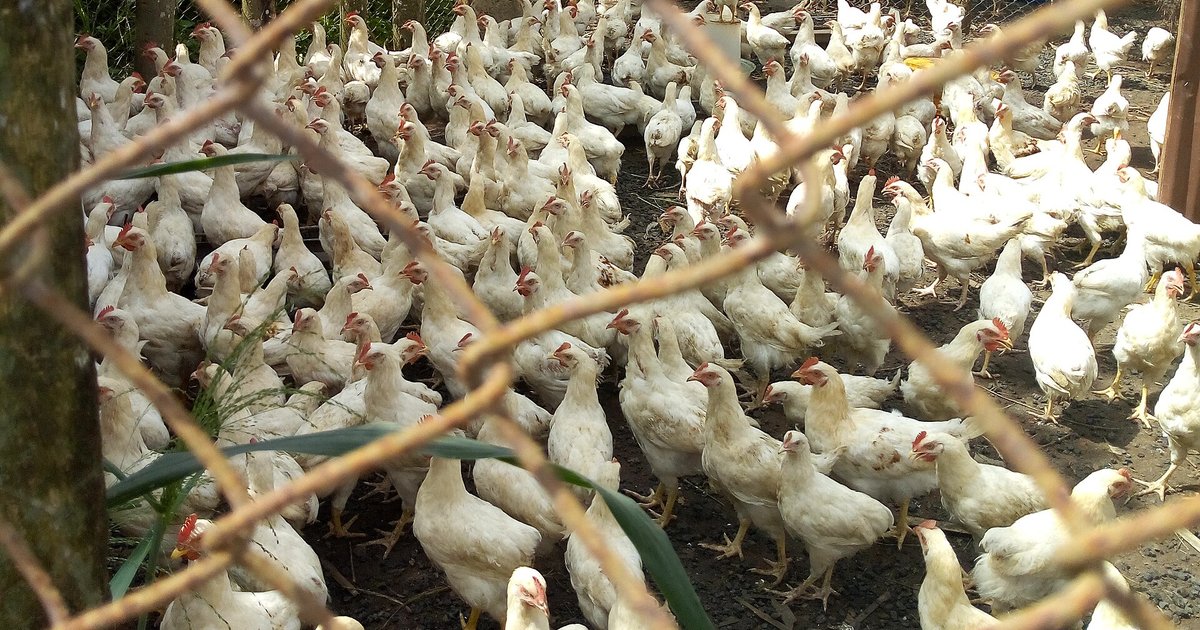
The programme for the training and placement of 1,000 young people in broiler chicken farming, run by the National Employment Agency (ANPE) and the Agency for the Development of Small and Medium Enterprises (ADPME), combines 10 days of practical training, a 2-month immersion placement in a poultry SME and entrepreneurship training. The selected young person receives two chicken houses of 100 m² each, with an announced capacity of 1,000 chickens every 45 days, professional equipment, a dormitory and storeroom, and the inputs for the first two batches; poultry technicians and veterinarians then monitor them.
The second registration campaign of the pilot phase, scheduled from 4 to 30 June 2025, was open to Beninese citizens aged 18 to 30 with a plot of at least 1,250 m² in Atlantique or Ouémé; it is closed. The programme is national, covers all 12 departments and announces several waves of registration after the pilot phase.
- Where: https://service-public.bj/public/services/service/PS01488
Finance with the FNDA and the banks
The FNDA is not the lender: it guarantees up to 50% of loans from banks and microfinance institutions, can subsidise their interest and funds projects through grants. At information sessions held in June 2024, it cited livestock farmers among those it supports. Credit is requested from the bank or microfinance institution; the grant, from the Territorial Agricultural Development Agency (ATDA) for your area. The public services portal announces 60 days for each of the windows.
The guarantee therefore covers only part of the loan, up to 50%. The windows, documents and announced rates are detailed in the guide How to get agricultural financing from the FNDA in Benin?
- Where: https://service-public.bj/public/services/service/PS00517
Choose your framework: approval under the Investment Code or a special economic zone
A project of at least 50,000,000 FCFA excluding tax comes within the scope of approval under the Investment Code, applied for at APIEx, which the law gives 20 working days from filing to issue its technical decision; the Council of Ministers then decides on the approval. The Code excludes purchase for resale in unaltered state and activities involving no working or processing, such as repackaging, cutting or packing finished or semi-finished products.
The study cites three sites: the Glo-Djigbé Industrial Zone (GDIZ), in Atlantique, and Sèmè Kpodji, in Ouémé, which are special economic zones, as well as Gakpé, an industrial zone in Atlantique. The special economic zones regime allows industrial, agri-food or agro-industrial production on approval by the approval committee and requires that at least 80% of the permanent direct jobs created go to nationals. The export regime requires at least 80% of turnover to come from exports; the intra-community trade regime starts at 10 billion FCFA invested.
- Where: https://investbenin.bj
Target ECOWAS markets first
The study presents Benin as the leading gateway to ECOWAS thanks to its neighbour, Nigeria. It ranks the main importers in the “ECOWAS before 2025” grouping, in tonnes a year on average over 2021-2023: Ghana (201,384.7), Benin (127,439.0), Guinea (67,700.0), the Gambia (40,051.0), Sierra Leone (34,638.3), Liberia (34,170.7), Togo (18,992.3), Cabo Verde (11,350.0), Guinea-Bissau (3,702.0) and Niger (3,563.0). It notes, for each of them, a customs duty exemption on products originating in the sub-region.
By road, Togo is 155.7 km from Benin, Ghana 788.6 km and Niger 1,087.7 km; by sea, Ghana is 261 nautical miles away and Togo 70. Like Benin, Togo and Niger use the CFA franc (XOF); Ghana uses the cedi. According to the study, the leading suppliers of these ten countries are the United States (93,867.3 tonnes a year), Brazil (71,513.3), Poland (61,473.0), Belgium (57,804.3) and the Netherlands (28,826.0).
The study earmarks these markets in particular for industries in special economic zones approved under the intra-community regime, which are not authorised to export outside ECOWAS.
- Where: https://investbenin.bj/assets/upload/others/49626966-4fa4-4766-ab9d-acd30e1b85f9.pdf
Look to Africa and the world, build partnerships and organise transport
In Africa, the ten leading importers over 2021-2023 are South Africa (406,021.3 tonnes a year), Angola (266,383.7), Ghana (201,384.7), Congo (165,860.0), the Democratic Republic of the Congo (153,667.0), Benin (127,439.0), Libya (110,441.3), Gabon (86,953.7), Guinea (67,700.0) and Zambia (58,990.3).
Worldwide, the ten leading importers are China (1,364,707.0 tonnes a year), the Netherlands (758,662.0), Germany (695,968.0), the United Arab Emirates (692,893.3), Japan (592,744.0), Saudi Arabia (573,118.0), France (524,108.0), the United Kingdom (457,636.0), Iraq (438,009.3) and the Philippines (429,411.7). The study presents them as outlets that industries based in Benin will be able to explore to diversify their exports. Brazil is the leading supplier of five of them (China, the United Arab Emirates, Japan, Saudi Arabia, the Philippines). Among the suppliers of these ten importers, the study ranks Brazil first (2,247,845 tonnes a year on average over 2021-2023), followed by Poland (644,521) and the United States (588,114.3). By sea, Cotonou is 3,344 nautical miles from Brazil, 4,929 from Poland and 8,805 from the United States.
According to the study, the supplier countries are home to industries with which companies setting up in Benin can form technical partnerships for their slaughtering and processing units. On logistics, Cotonou has a port and an airport, and the country has land borders with Nigeria, Togo, Niger and Burkina Faso; the study lists twelve shipping lines and eighteen airlines operating in Benin, with their contact details.
- Where: https://investbenin.bj/assets/upload/others/49626966-4fa4-4766-ab9d-acd30e1b85f9.pdf
The pitfalls
- Reading an import market as an export market. In the study’s tables, Benin appears as an importer; the foreign markets are those it proposes to industries based in Benin, facing suppliers that deliver hundreds of thousands of tonnes.
- Assuming that a customs advantage covers poultry. For the Netherlands, Germany and France, the study cites duty-free, quota-free entry for agricultural products such as pineapple, cotton and cashew nuts; for the other leading importers worldwide, a “WTO advantage” (World Trade Organization).
- Treating the import ban as total. Decided with effect from 1 January 2025, it was accompanied by a moratorium allowing reduced imports, according to the government spokesperson in February 2025.
- Setting up a cutting or packing workshop and aiming for approval. The Investment Code excludes repackaging, cutting and packing of finished or semi-finished products.
- Choosing the intra-community regime of a special economic zone while aiming to export outside ECOWAS. This regime does not allow it.
- Believing the FNDA guarantee covers the whole loan. It covers up to 50%.
Frequently asked questions
How much poultry does Benin import?
According to the APIEx fact sheet, 90,100 tonnes of poultry meat and edible offal in 2024, after 89,700 tonnes in 2020, 116,500 in 2021, 133,000 in 2022 and 132,900 in 2023; it gives an average of 118,639 tonnes a year. The APIEx study, which stops at 2023, uses 127,439 tonnes a year on average over 2021-2023.
What share of demand does local production cover?
The APIEx fact sheet puts local production at 9,675 tonnes, or 8% of local demand.
What support exists for starting a broiler chicken farm?
The programme for the training and placement of 1,000 young people, run by ANPE and ADPME, provides training, chicken houses and inputs to the selected candidates; its June 2025 campaign is closed and further waves are announced. The FNDA guarantees up to 50% of loans from banks and microfinance institutions and funds projects through grants.
Is approval needed to set up a poultry unit?
The Investment Code covers projects of at least 50,000,000 FCFA excluding tax: APIEx has 20 working days for its technical decision, then the Council of Ministers decides. Setting up in a special economic zone requires approval issued by the approval committee.
What are Benin’s rules on poultry imports?
The APIEx fact sheet cites the import ban on poultry products among the value chain’s specific measures. The government decided to apply it from 1 January 2025; in February 2025, its spokesperson explained that a moratorium allowed reduced imports.
Related incentive schemes
 APIEx
Approval under Benin's Investment Code
Companies governed by Beninese law, national or foreign, that invest at least 50,000,000 FCFA excluding tax, and promoters of tourism, cultural, sports, health, education or warehousing infrastructure projects.
dispositifpermanent FNDA
National Agricultural Development Fund
Farmers, agricultural entrepreneurs and agricultural businesses, and farmers’ professional organisations (OPA), that produce, process or market agricultural, animal or fisheries products.
financingpermanent APIEx
Special economic zones (SEZ) regime
Companies, Beninese or foreign, incorporated as legal entities, that want to set up a production, processing or assembly unit, or infrastructure for industry or trade, in a special economic zone.
dispositifpermanent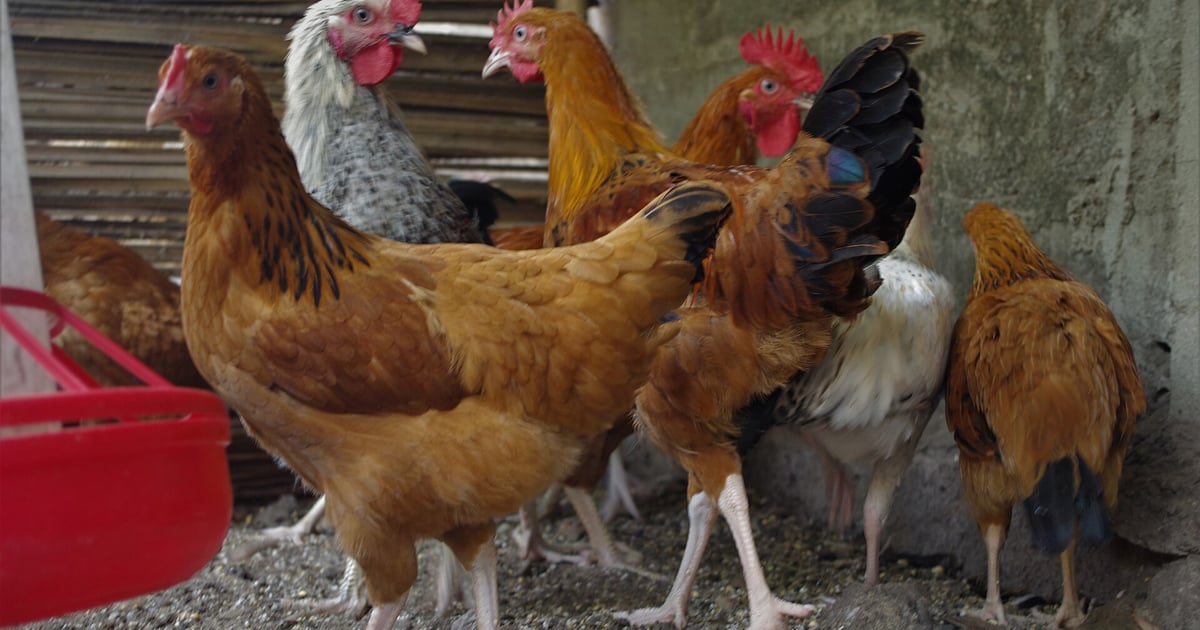 ANPE
Training and placement of 1,000 young people in broiler farming
Young Beninese citizens aged 18 to 30 who have a plot of at least 1,250 m² and want to become broiler chicken farmers; the campaign shown on the portal was reserved for residents of Atlantique and Ouémé.
programmeclosed