News
Electricity: government puts imported share at 60%
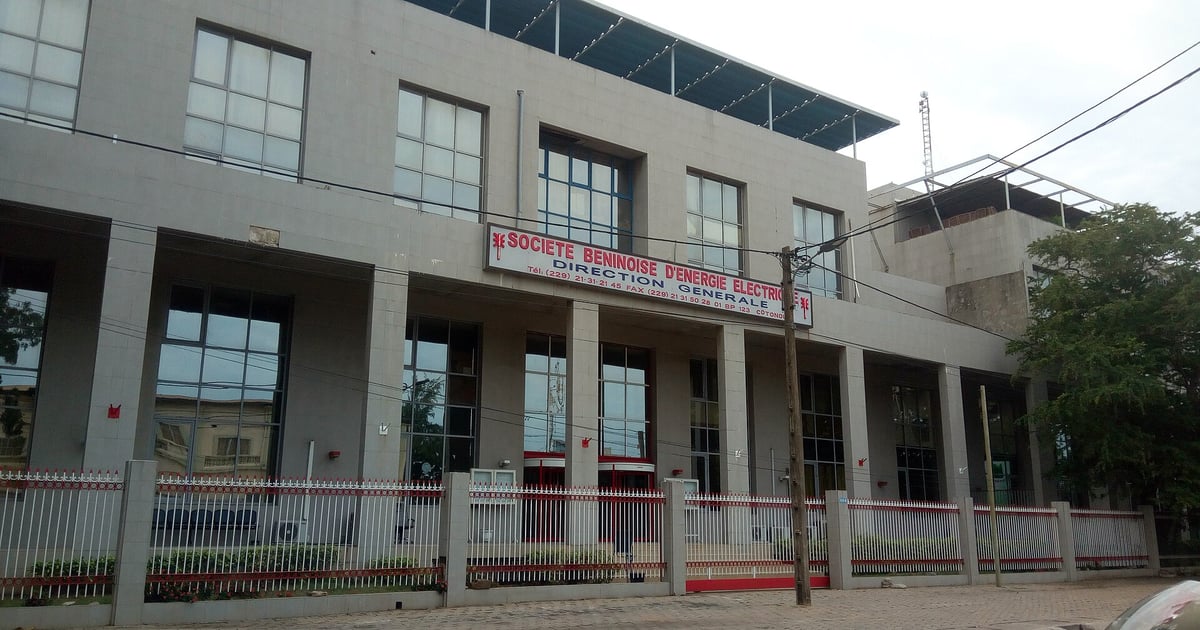
On 11 November, the government spokesman blamed the power cuts on a Nigerian supplier facing technical difficulties; they could last several months. The SBEE maintains a free line, 7302, for reporting incidents.
Unofficial English translation of the French article: the French text prevails. Read the French version.
What has been announced
The government spokesman, Wilfried Léandre Houngbédji, stated on 11 November 2026 that national production covers about 40% of electricity needs, with the remaining 60% having to come from abroad. He blamed a Nigerian supplier facing technical difficulties for several weeks and said the disruptions could last several months. The government is looking for replacement supply capacity: the Ministry of Energy is tasked with examining stopgap solutions that could reduce interruptions while the Nigerian supplier's equipment is being repaired. The World Bank report Benin Economic Update gives 60% for 2024 (93% in 2017).
On 3 November, the Benin Electricity Production Company (SBPE) and the Benin Electric Energy Company (SBEE) had attributed the cuts to supply restrictions coming from Ghana and Nigeria, apologised and called for energy savings. The SBEE maintains a free line, 7302, to report incidents.
The Dogo-Bis project is the other announcement. It was presented on 30 January 2026 as a 128 MW hydroelectric dam on the Ouémé, worth $300 million, financed by the World Bank, in two phases. Decree No. 2025-946 of 17 December 2025 sets its institutional framework: four bodies, including a steering committee (decree). The World Bank appraisal document (19 May 2026) describes three phases for about $1.22 billion. Phase 1 ($150 million) covers studies, tracks, electrification of 23 localities and social facilities. The dam falls under phase 2 ($750 million, including $300 million of World Bank credit, indicative), whose approval is estimated for May 2028: in this document, $300 million refers to the credit share of that phase, not the cost of the programme. According to the same document, the SBEE's investment plan provides for tariff increases of 15% every two years.
What power cuts and the bill mean for a small business
The World Bank report quantifies the weight of electricity on the firms surveyed (press release of 9 November 2026). These data cover 2024, for formal firms: they do not measure the current episode.
- Power cuts: 86.1% of firms experienced them, nearly eight a month, against 2.1 and 0.6 in two comparison groups of countries.
- Generators: nearly 60% of firms invest in and run backup generators, against 32.9% in the first comparison group; purchase, fuel and maintenance add to the bill.
- Bill: 3.1% of sales in 2024 for formal firms (6.3% in 2009), about 5% in manufacturing; small firms spend about four times more than large ones, as a share of sales rather than in absolute terms.
- Connection: an average wait of 48.2 days, about twice the comparison group.
What this opens up for entrepreneurs
- Phase 1 works contracts. The World Bank procurement plan (updated on 11 November 2026) provides for national open tenders: social infrastructure works in four communes (Kétou, Dassa-Zoumè, Zagnanado, Ouinhi), estimated at $8 million, and boreholes, at $1.2 million. Notices are provisionally planned for 23 October 2027 (boreholes) and 11 March 2028 (social infrastructure).
- Studies, supervision and supplies. The same plan lists consultant contracts (integrated feasibility studies, $10 million; supervision of electricity distribution works, $4 million; expressions of interest planned from June 2027) and small supply lots for the project unit (IT equipment, furniture, air conditioners, generator).
- Connection in 23 localities. Phase 1 provides for about 183 km of lines and connections for about 5,000 households, businesses and public facilities (Zagnanado, Ouinhi, Covè, Kétou, Dassa-Zoumè).